Skip Navigation
Search

- Home
- About
- Programs
- Environmental Services
- Workplace Safety
- Accident and Injury Reporting
- Respiratory Protection
- Shipping of Hazardous Materials/Dangerous Goods
- Working in Extreme Weather
- Hazard Communication/Right to Know
- Request an Assessment
- Bloodborne Pathogens
- Compressed Gas Safety
- Confined Space Safety
- Drone Safety
- Electrical Safety
- Fall Protection
- Machine Guarding
- Food Permits and Food Safety
- Hazardous Materials and Waste
- Laboratory Safety
- Radiation Safety
- Fire and Emergency Services
- Healthcare Safety
- Policies, Permits, Resources
- News and Information
- Training
Biosafety Basics
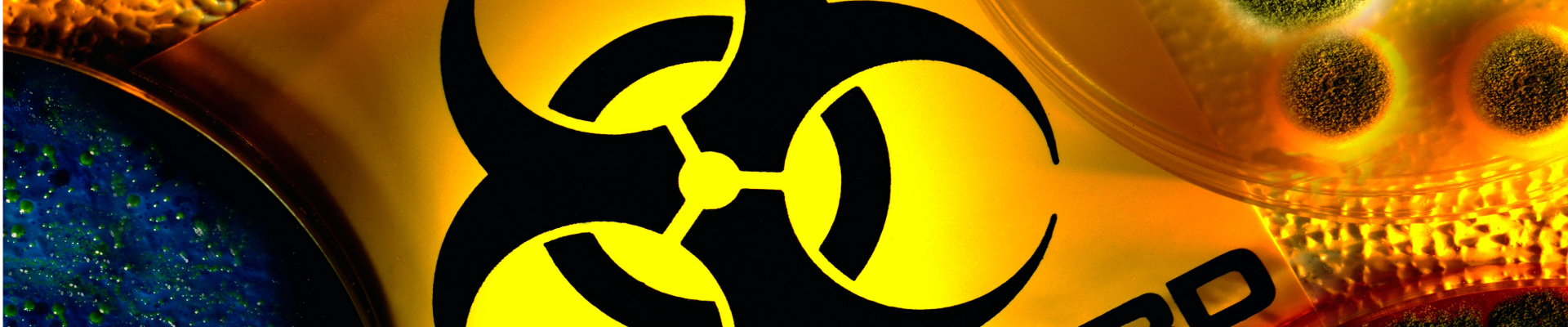
Biohazardous materials are infectious agents or other biological materials that present a risk or potential risk to the health of humans, animals or the environment.
Biohazardous materials include:
- organisms and viruses infectious to humans, animals or plants (e.g. parasites, viruses, bacteria, fungi, prions, rickettsia) cultured human and animal cells
- certain types of recombinant and/or synthetic DNA
- biologically active agents that may cause disease in other living organisms or cause significant impact to the environment or community. (i.e. toxins, allergens, venoms)
The keys to working safely with biohazardous materials are:
- Performing a Risk Assessment prior to beginning work with biohazardous materials or when procedures and protocols have changed for an established standard operating procedure (SOP)
- Understanding what Risk Groups and Biosafety Levels are and the differences between them
- Ensuring that Training Requirements have been met prior to beginning work with biohazardous materials
- Ensuring that any required equipment has been certifed and is in proper working order
- Ensuring that any required PPE is available and that laboratory personnel are trained in it's proper use and care
- Posting Biosafety Signs in appropriate locations throughout the lab and especially at any entrance to the lab
-
See pageschemical safety
-
See pagesgeneral laboratory safety

















































































-
See pageschemical safety
-
See pagesgeneral laboratory safety
Division of Enterprise Risk ManagementEnvironmental Health & Safety110 Suffolk HallStony Brook, NY 11794-6200
Phone: (631) 632-6410Fax: 631-632-9683